.png)
Blog


From Dust to Trust: Rebuilding Shattered Dreams with the God of the Psalms (Psalms 90–106)
What happens when your dreams are pulverized? To whom do you turn? Where do you run? In the Psalms, Book 3 (Psalms 73–89) concludes with the crushing news that the crown of David had been buried in the dust of the earth. In short, because of Israel’s sin, and the sin of David’s sons in … Continue reading From Dust to Trust: Rebuilding Shattered Dreams with the God of the Psalms (Psalms 90–106)

Reading the Psalms from the Beginning: How Reading the Psalms Canonically Is More Ancient Than Modern
Is a canonical approach to the Psalms a new creation, or the invention of modern scholars? Or do we do we find anything like it in church history? This important question was raised recently and I didn’t have a one-stop, go-to resource to provide an answer in the affirmative. Indeed, most studies advocating the canonical … Continue reading Reading the Psalms from the Beginning: How Reading the Psalms Canonically Is More Ancient Than Modern

From Exaltation to Exile: The Tragic Fall of David’s House (Psalms 73–89)
From Exaltation to Exile: The Tragic Fall of David’s House In his chapter on the Psalms, Paul House writes of Book 3, Psalms 73–89: Subtle shifts in tone, superscriptions and content leading up to historical summaries in Psalms 78 and 89 indicate that part three [Psalms 73–89] reflects Israel’s decline into sin and exile. This … Continue reading From Exaltation to Exile: The Tragic Fall of David’s House (Psalms 73–89)

Reading the Psalms Carefully Means Reading the Psalms Canonically: Six Quotations from ‘The Shape and Message of Psalms 73–89’
Among recent studies on the Psalms, one of the most linguistically rigorous is that of Robert Cole, (former?) professor of Old Testament at Southeastern Theological Seminary. His monograph The Shape of the Message of Book III (Psalms 73–89) shows just how carefully the editor(s) of the Psalms arranged the collection of the Psalms. And any student of … Continue reading Reading the Psalms Carefully Means Reading the Psalms Canonically: Six Quotations from ‘The Shape and Message of Psalms 73–89’

A Parade and a Pacemaker: Getting Into the Psalms, So That the Psalms Get Into You
A Parade and a Pacemaker: Getting Into the Psalms, So That the Psalms Get Into You After three weeks away from preaching, and hearing three faithful sermons on Psalms 22–24, Psalm 73, and Psalm 88, I took to the pulpit again yesterday. And instead of jumping into Book 3 of the Psalms, I sought to answer … Continue reading A Parade and a Pacemaker: Getting Into the Psalms, So That the Psalms Get Into You

Gone with the Wind: Malcolm Muggeridge on the Effervescence of Geo-Political Rulers
My best friend from high school posted this Malcolm Muggeridge quote today on his Facebook account. In light of the world’s unrest, and our need to pray for international peace, they are quite fitting. In an essay entitled “But Not of Christ,” Muggeridge writes, We look back upon history and what do we see? Empires … Continue reading Gone with the Wind: Malcolm Muggeridge on the Effervescence of Geo-Political Rulers

Does Paul Interpret Moses Allegorically? A Few Lexical Notes on Galatians 4:24
Now this was written allegorically: these women are two covenants. One is from Mount Sinai, bearing children for slavery; she is Hagar.[1] – Galatians 4:24 – What does ἀλληγορούμενα mean in Galatians 4:24? To answer the question about the lexical meaning of ἀλληγορούμενα is difficult, because it is only used once in the New Testament. That … Continue reading Does Paul Interpret Moses Allegorically? A Few Lexical Notes on Galatians 4:24
Learning to Read Moses’ Allegory: Matthew Emerson on Galatians 4:21–31 and Paul’s Reading of the Pentateuch
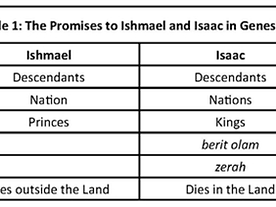
In his illuminating article on Galatians 4:21–31, Matthew Emerson shows how we should learn to read Moses from the Apostle Paul. In a passage that typically is used as an example for how to not read the Old Testament like Paul, Emerson makes the opposite case. And I believe he is exactly right. In his article,“Arbitrary … Continue reading Learning to Read Moses’ Allegory: Matthew Emerson on Galatians 4:21–31 and Paul’s Reading of the Pentateuch
On “Speaking Allegorically”: An Engagement with Friedrich Büschel in the TDNT
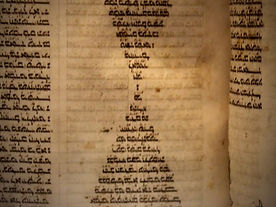
[Here is the first in a few blogposts following up from today’s Sunday School lesson on Galatians 4:21–31 at Occoquan Bible Church.] In the first volume of the Theological Dictionary of the New Testament, Friedrich Büchsel notes how “allegorical exposition” is common among ancient people including “Indians, Mohammedans, Greeks, Jews and Christians.”[1] In particular, allegorical … Continue reading On “Speaking Allegorically”: An Engagement with Friedrich Büschel in the TDNT

Preaching to the Late Modern Mind: Five Cultural Narratives to Know
In his book Preaching: Communicating Faith in an Age of Skepticism, Tim Keller addresses how Christianity confronts culture. Wisely he speaks of the way we must (1) affirm truth in culture, (2) confront idols in culture, and (3) show how truth in culture is derived from and only satisfied by the Christ who reigns supreme … Continue reading Preaching to the Late Modern Mind: Five Cultural Narratives to Know
- 150Page 62