.png)
Blog


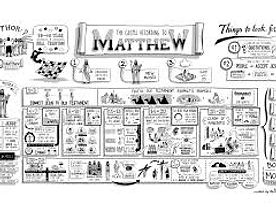
The Artistic Evangelist: Seeing the Structure of Matthew’s Gospel
In his theological commentary on the Sermon on the Mount, The Sermon on the Mount and Human Flourishing, Jonathan Pennington spends chapter five outlining the structure of Matthew’s Gospel and the Sermon on the Mount, in particular. Following Robert Gundry’s observation that Matthew is a book filled with “literary and theological art,” Pennington alerts the careful … Continue reading The Artistic Evangelist: Seeing the Structure of Matthew’s Gospel

Unshakeable Faith: Seeking Christ Through Haggai’s Temple – Part 2 (Haggai 2:1–23)
Unshakeable Faith: Seeking Christ Through Haggai’s Temple (pt.2) The book of Haggai centers on God’s great promise to restore the temple during the days of Judah’s return from exile (520 BC). In this little book, there are four messages from the Lord. The second, third, and fourth messages in Haggai are all found in chapter … Continue reading Unshakeable Faith: Seeking Christ Through Haggai’s Temple – Part 2 (Haggai 2:1–23)

“I Will Shake the Earth”: Reading Haggai in Canonical Context
How should we understand the earth-shaking, temple-making promises of Haggai 2? Twice in this short book, “Haggai the prophet” announces that heaven and earth will be shaken by the Lord (2:6–7 and 2:21) and that on the other side of this cosmos-shaking event (or events), the Lord will establish a greater temple (2:9) and restore … Continue reading “I Will Shake the Earth”: Reading Haggai in Canonical Context

A Hole in Our Holy Temple? Toward a Whole Bible Vision of God’s Dwelling Place
The MacArthur Study Bible is a treasure trove for commentary on the Bible. Many weeks in preparation for preaching I look at its notes, and profit from its historical, grammatical, and theological observations. This week, however, as I read its commentary on Haggai, I couldn’t help but notice some biblical data missing from a table … Continue reading A Hole in Our Holy Temple? Toward a Whole Bible Vision of God’s Dwelling Place

Unshakeable Faith: Seeing Christ Through Haggai’s Temple — Part 1 (Haggai 1:1–2:9)
Unshakeable Faith: Seeing Christ Through Haggai’s Temple This Sunday we began a two-week series on the book of Haggai. If you are not familiar with this little book, it is the tenth book in the Minor Prophets, and its four-fold message serves as a turning point in the Twelve, as the Book of the Twelve … Continue reading Unshakeable Faith: Seeing Christ Through Haggai’s Temple — Part 1 (Haggai 1:1–2:9)
Finding Unity in The Minor Prophets
How do we put the Minor Prophets together? That has a been a topic of discussion on this blog and at our church over the last few months. As we’ve preached Jonah, Nahum, and (now) Haggai, we’ve paid careful attention the literary structure of the Twelve. With help from Paul House and David Peterson and … Continue reading Finding Unity in The Minor Prophets

Seeing Exodus 19:1–8: A Literary Structure
In his outstanding monograph on Exodus 19:5–6, A Royal Priesthood: Literary and Intertextual Perspectives on an Image of Israel in Exodus 19:5–6, John A. Davies provides a literary/chiastic structure of Exodus 19:1–8. Paying careful attention to the voices (first, second, third person; single or plural) and the contents of these eight verses, he shows two chiastic … Continue reading Seeing Exodus 19:1–8: A Literary Structure

On the Priesthood: A Personal Update and Prayer Request
In 2013 I finished my dissertation, A Biblical-Theological Investigation of Christ’s Priesthood and Covenant Mediation with Respect to the Extent of the Atonement. While the theological question it answered pertained to the extent of the atonement, the bulk of its pages (nearly 400 of them) considered a biblical typology of priesthood from Genesis to Revelation. In … Continue reading On the Priesthood: A Personal Update and Prayer Request

Rightly Dividing the Word of Truth: Daniel Block’s Answer to a Feminist Reading of Nahum 3
In the Bible there are many explicit images, stories, and words. Read Genesis 34, Genesis 38, Ezekiel 16, the Song of Songs, or Paul’s use of the word skubala (Philippians 3:8) and you will come in contact with holy writ that would require an ‘R’ rating if put to film. Yet, because the medium of God’s Word … Continue reading Rightly Dividing the Word of Truth: Daniel Block’s Answer to a Feminist Reading of Nahum 3

In What Did Old Testament Saints Believe?
In discussions about salvation and interpretation of the Old Testament, two related questions are often asked. How were the Old Testament saints saved? Or, in whom or what did they believe? How much did the Old Testament know about the coming Christ? Recently, in reading through The Marrow of Modern Divinity by Edward Fisher, I came across … Continue reading In What Did Old Testament Saints Believe?
- 150Page 49