.png)
Blog


A Sunday Hymn: Now Why This Fear?
Over the weekend, I attended the 2013 Indiana Shepherd’s Conference. It was a joy to fellowship with Indiana pastors and pastor-theologians like George Robinson, Greg Gilbert, Eric Bancroft, and Timothy Beougher. The topic was evangelism and the conversation was motivating without being condemning. (All that to say, you should listen to the audio when it … Continue reading A Sunday Hymn: Now Why This Fear?
A Theological Introduction to Ecclesiastes (pt. 2): Date, Title, Genre
[This is the second part of a three-part series outlining a theological introduction to Ecclesiastes]. Date: Tenth Century If Solomon is the author (see part one), the date is pretty easy to determine (10th Century B.C.). A better question might be—on the basis of Solomon’s wise but foolish life—when did Solomon write this? The book … Continue reading A Theological Introduction to Ecclesiastes (pt. 2): Date, Title, Genre

A Theological Introduction to Ecclesiastes (Pt. 1): Authorship, Authority, and Intertextuality
[This post starts a three-part series aimed to introduce Ecclesiastes and draw a few theological implications from its overview]. To get a handle on the book of Ecclesiastes it is imperative to understand who the human author is (or in this case, who is the most likely candidate). Likewise, since Ecclesiastes is part of the … Continue reading A Theological Introduction to Ecclesiastes (Pt. 1): Authorship, Authority, and Intertextuality

The Doctrine of the Trinity: Three Distinct Persons
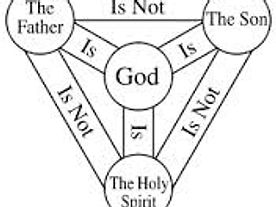
Over the weekend I presented the first part of a ‘bare-bones’ outline of the Trinity. In short order, I argued that the doctrine can be sub-divided into two basic assertions, which each require a healthy dose of explaining. The first proposition is God is one God. The second proposition is God is three Persons. Under those headings I … Continue reading The Doctrine of the Trinity: Three Distinct Persons
The Doctrine of the Trinity: God is One God
There is nothing bare-bones about the Trinity. But sometimes when introducing this doctrine it helps to give a brief, ‘bare-bones’ outline to help young believers or novice theologians understand the parameters of orthodox belief about Scripture’s deepest mystery. With such an intention, let me lay out a bare-bones doctrine of the Trinity. In its shortest … Continue reading The Doctrine of the Trinity: God is One God
From Eden to Zion: A Temple Story
What is the best way to describe the Bible? Is it a collection of verses that supply promises and warnings for the Christian life? Is it a collection of books that each point to Jesus Christ? Or is it an epic story of Paradise Created, Paradise Lost, Paradise Promised, and Paradise Made New in Christ? … Continue reading From Eden to Zion: A Temple Story
1 John 1:1-4: We See Because He First Showed Himself
In John’s first letter, he introduces his audience to the Christ who he and the disciples had heard, seen, and touched. While it is apparent John’s tactile verbs—‘we have heard’ and ‘we have seen’—are meant to stress the flesh and blood reality of Jesus Christ, a closer look at the structure of 1 John 1:1-4, … Continue reading 1 John 1:1-4: We See Because He First Showed Himself

Noonday Light: Christians and the Public Square
“Set your minds on things that are above, not on things that are on earth.” – Colossians 3:2 – While many stumble in the light of noonday, God offers light to those who look up to him. These links are given to help you walk in the light as a growing disciple of Jesus Christ. … Continue reading Noonday Light: Christians and the Public Square
Evangelism Then and Now: The Same Seed, A Different Soil
[This is the most recent “Feeding on the Word” article from our church newsletter] Over the last few decades Americans have witnessed an unprecedented move away from traditional marriage toward a choose-your-own-adventure approach to sexuality. Influenced by academics, funded by political action groups, and promoted by entertainment personalities, our culture has bought into the notion … Continue reading Evangelism Then and Now: The Same Seed, A Different Soil
Jesus Knew His Calling: A Missional Christology
In the Gospels, Jesus frequently spoke of why he “came.” For instance, in Mark 1:38, when the crowds are pressing in on him, Jesus tells his disciples, “Let us go on to the next towns, that I may preach there also, for that is why I came out.” While Jesus was attentive to the needs of man; … Continue reading Jesus Knew His Calling: A Missional Christology
- 150Page 103