.png)
Reconsidering “Above All”: How Hermeneutics Must Intersect with and Inform Our Hymnody
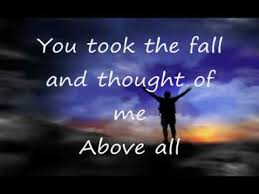 Yesterday, I raised concerns with the popular song “Above All” by Michael W. Smith. For some time, I have taken theological issue with the central lyric of the song:
Like a rose / Trampled on the ground
You took the fall / And thought of me
Above all.
Those last two lines have always made me stumble because of the way they seem to eclipse God with humanity. I’ve always heard them as making the claim that Christ thought more of me than he did of God—which I argued reverses the God-centered nature of the universe and the cross.
For that reason, I was theologically opposed to the song. While I could sing the rest of the song with delight, I always cringed as the chorus neared. Hence, I set out to write these reflections so as to expose the errant chorus. However, a funny thing happened along the way—I read the lyrics again (and again) and this time in context.
Unlike any time before, I read the chorus in light of the whole song. Not surprisingly, reading it context provided greater light. But surprisingly, I had to adjust my thinking for I realized that if I (or we) let the song define its own terms—a principle of general hermeneutics—it does not ascribe humanity to a place higher than God. In fact, the song rightly retains a high view of God’s sovereignty and the dignity assigned to humanity, as the pinnacle of creation.
A Few Words About “All”
I am quite familiar with the three-letter word “all.” I spent my entire dissertation wrestling with the passages in Scripture that tell us that God desires all men to be saved and come to a knowledge of the truth (1 Tim 2:4) and that the grace of God has appeared, bringing salvation for all people (Titus 2:11). These are only two of many proof-texts for general atonement, the view that Christ died for all people without exception.
Briefly stated, these “all” passages along with the “world” passages (e.g., John 1:29; 3:16, 17, 18; 5:40; 6:32-51; 12:48; 16:8-11; 2 Cor 5:19; 1 John 2:2; 4:14) create a formidable argument against definite atonement, the view that Christ death effected salvation for a countless multitude but not every single person. And without fail the prevailing argument for the “all” and “world” passages goes like this—“all means all, and that’s all all means.” Yet, as is pointed out by advocates of definite atonement (and is admitted by most opponents of definite atonement), the context of “all” makes all the difference in the world.
Of course in the discussion about the extent of the atonement, differences of opinion swell because different theological positions employ different hermeneutical approaches. In this post, I am not trying to take on that debate. Only to point out my own inconsistency as I came to “Above All.”
Here’s what I mean: when I interpret 1 Timothy 2:4, for instance, I explain understand “all men” to be referring to all kinds of men, previously explicated in the previous verses (vv. 1–3). When Paul says that he “urge[s] that supplications, prayers, intercessions, and thanksgivings be made for all people, for kings and all who are in high position . . .” his language (“for kings and all who are in high position”) is an appositional explanation of “made for all people.”Therefore, the all is not “all without distinction,” but all kinds of people—rich and poor, weak and powerful, etc.
I believe the same sort of distributive principle is at work in Titus 2. Paul addresses old and young, men and women, slaves and masters. Then in verse 11, he states that “the grace of God has appeared, bringing salvation for all people.” In context, I understand all people to be defined by the previous verses. Paul believes that all kinds of people may find salvation through Christ, not just Jewish men.
When it comes to these verses in Scripture, I have always interpreted the “all” in light of the preceding context. However, ironically, I had not done that with Michael W. Smith’s popular song.
Seeing the Whole Song
Just what does “all” mean in “above all”? The only way to answer that is to consider the whole song. Experientially, most worshipers (in church) never see all the lyrics to this song at one time, because they are given the song in a series of artistic PowerPoint slides. However, since every song is unit to itself, it is vital to see the whole thing. That we don’t usually see entire song lyrics (in our use of video projection), we ought to remember how media manipulates the message.
In this case, it is difficult to read/think/sing the chorus and remember the way that the stanzas define the terms, so we need t to read the song in its entirety:
Above all powers
Above all kings
Above all nature
And all created things
Above all wisdom
And all the ways of man
You were here
Before the world began
Above all kingdoms
Above all thrones
Above all wonders
The world has ever known
Above all wealth
And treasures of the earth
There’s no way to measure
What You’re worth
Crucified
Laid behind a stone
You lived to die
Rejected and alone
Like a rose
Trampled on the ground
You took the fall
And thought of me
Above all
These stanzas cycle and repeat, but this is it. And what we must observe, as I did with the lyrics above, is the way that “above all” is used in the first two stanzas. Before climaxing at the chorus, “above all” is used no less than eight times, plus three other places where “above all” is implied by means of an ellipse.
In each instance (eleven total), the statement compares God to some aspect of creation (powers, kings, nature, created things, wisdom, the ways of man; kingdoms, thrones, wonders, wealth, and treasure), and in each instance God prevails over creation. The lyrics explicitly affirm God’s eternality (end of stanza 1) and his infinite nature (end of stanza 2). In truth, the two stanzas have an incredibly high view of God and his sovereignty.
The chorus then turns to the crucifixion, that point in history, where Christ is most humbled (Phil 2:5–8). This is the place where God’s love is most powerfully demonstrated (Rom 5:8; 1 John 3:16: 4:7–12), and the place God intends to save us. It is in response to the cross, that we sinners should sense our greatest unworthiness and his most tender and compassionate love. So far so good.
Above All Created Things
The only remaining question: What about the final “above all” in the chorus. For many people, these two words have ruined the rest of this God-exalting song. They suppose that the lyrics become man-centered and too concerned with man’s need for self-esteem. I share those concerns and have until this inquiry—first drafted two years ago—voiced them concerning this chorus.
However, reading charitably and in the context of the whole song (not just in the singular PowerPoint slide), I think it is best to understand “and thought of me above all” as “and thought of me above all creation.” In other words, the chorus is not meant to put man over God, nor is it in this moment on the cross aiming to turn the tables. Rather, it seems to be saying—based on the context—that the God of creation has chosen to create redeem humanity in a special way, just as he made mankind in a special way—in his own image (Gen 1:26–28).
Lyrically, this reading does the best justice to the meaning of “above all” in the song. It also does the best justice to the high view of God in the song. And it does the best justice to the theology of Christ’s death—namely, he laid down his life for his sheep, his bride, his church, his children. Jesus did not die generically for creation; he died especially for humanity. And even more specifically, he did not die for the old order. He died to make an entirely new humanity, a new creation purchased and produced by his death and resurrection. As 1 Timothy 4:10, Jesus did not die in general; he died especially for those who believe.
Conclusion
Therefore, after a decade of wincing at Michael W. Smith’s popular song, I can with renewed zeal sing “Like a rose / Trampled on the ground / You took the fall / And thought of me / Above all.” Indeed, it is a glorious truth that the God who is above all things, made himself lower than the angels that he might redeem a people for his own possession. In his death, he did not simply make a way for us to come to him. He came to us and above all created things, he raised us up to heavenly places with him. That is a glorious truth and worth singing without reservation.
*****************************
A Post Script
You might wonder why we should exegete a non-inspired song. In truth, I’ve never done it before now. But it shows at least three important things:
- We should take seriously the songs that we sing in corporate service. Though our primary task is to interpret the Scriptures; it may at times be necessary and worthwhile to apply the hermeneutical tools sharpened with biblical exegesis to the songs we sing, never forgetting that unless the song directly quotes Scripture, it is not the inspired and inerrant word of God.
- Music leaders should be capable interpreters. They should be able to rightly handle the word of truth (Scripture) and with a biblical worldview, they should be able to test and approve all the songs that they would bring to the church.
- Finally, as a very competent and theologically-minded music leader shared with me, it should be remembered that most people in the pews will not naturally think this precisely about the songs we sing. Therefore, if this song is to be used, it should be introduced and explained. We cannot assume that people will naturally draw the right conclusions just by hearing the lyrics. Rather, knowing the self-centered tendencies of our American culture, we should be aware of Romantic lyrics that (unintentionally) bolster a sentimental type of love that assumes the cross and centers God’s love on bolstering our self-esteem.
As was outlined above, the song Above All does not have to bolster self-love. But it can. May song leaders and preaching pastors lead their congregations to think wisely about this song and all songs, until with purified hearts and glorified bodies we all sing:
“Worthy are you to take the scroll and to open its seals, for you were slain, and by your blood you ransomed people for God from every tribe and language and people and nation, and you have made them a kingdom and priests to our God, and they shall reign on the earth.” (Revelation 5:9–10)
Soli Deo Gloria
ds